
What is a POS (point of sale) system? Everything you need to know

Discover the future of POS systems, how they work and what type you should get for your business.

Discover the future of POS systems, how they work and what type you should get for your business.

Imagine a customer walks into your store. Two hours ago, they were browsing your collection on their smartphone while commuting. They added a jacket to their digital cart but wanted to feel the fabric before committing. As they approach the counter, your staff member greets them, completes the transaction on a handheld device in seconds, and the customer walks out with a digital receipt already sitting in their inbox.

This is the reality of the modern shopping experience. The physical counter has shifted from being a place where money is exchanged to a sophisticated, invisible layer of technology that connects every part of a business. Whether you are a small startup or a scaling enterprise, your point of sale (POS) system is now the central nervous system of your brand. It manages your inventory, understands your customers, and powers your growth across every channel.

This guide will explore the technology, the trends, and the strategic choices that turn a basic transaction into a powerful engine for business scaling.
What is a POS?

POS stands for point of sale, which is also known as the point of purchase (POP). A point of sale is the exact time and place where a retail transaction is finalised. It represents the moment of exchange when a customer hands over money in return for your goods or services.

The point of sale is the customer-facing touchpoint. When a customer stands at your physical checkout counter, they are at a point of sale. When they buy a t-shirt at your temporary festival booth or order food through a self-service kiosk, they are also interacting with a point of sale.

Essentially, it represents the where and the when of commerce. It is any environment where a transaction can be initiated and completed.

What is a POS system?

If the POS is the physical or digital location of the transaction, the POS system is the engine that drives it. You cannot have a seamless transaction at the point of sale without a robust system working behind the scenes.

A POS system refers to the integrated stack of hardware and software that enables your business to make those sales, track inventory, and manage customer data.  

To see the difference clearly, consider this breakdown:

  • The POS (The touchpoint): The counter, the market stand, the mobile application, or the website checkout page.

  • The POS System (The infrastructure): The combined power of your cloud software, your physical payment terminal, your barcode scanner, and your backend data tracking.

The anatomy of a modern POS system

To understand how a POS system works, you have to look at its two core components:

  1. The software: This is the operating system of your business. It tracks inventory in real time, stores customer data, manages employee shifts, and provides the interface for ringing up sales. Today, most POS software is cloud-based, meaning your data is stored securely online and can be accessed from anywhere.

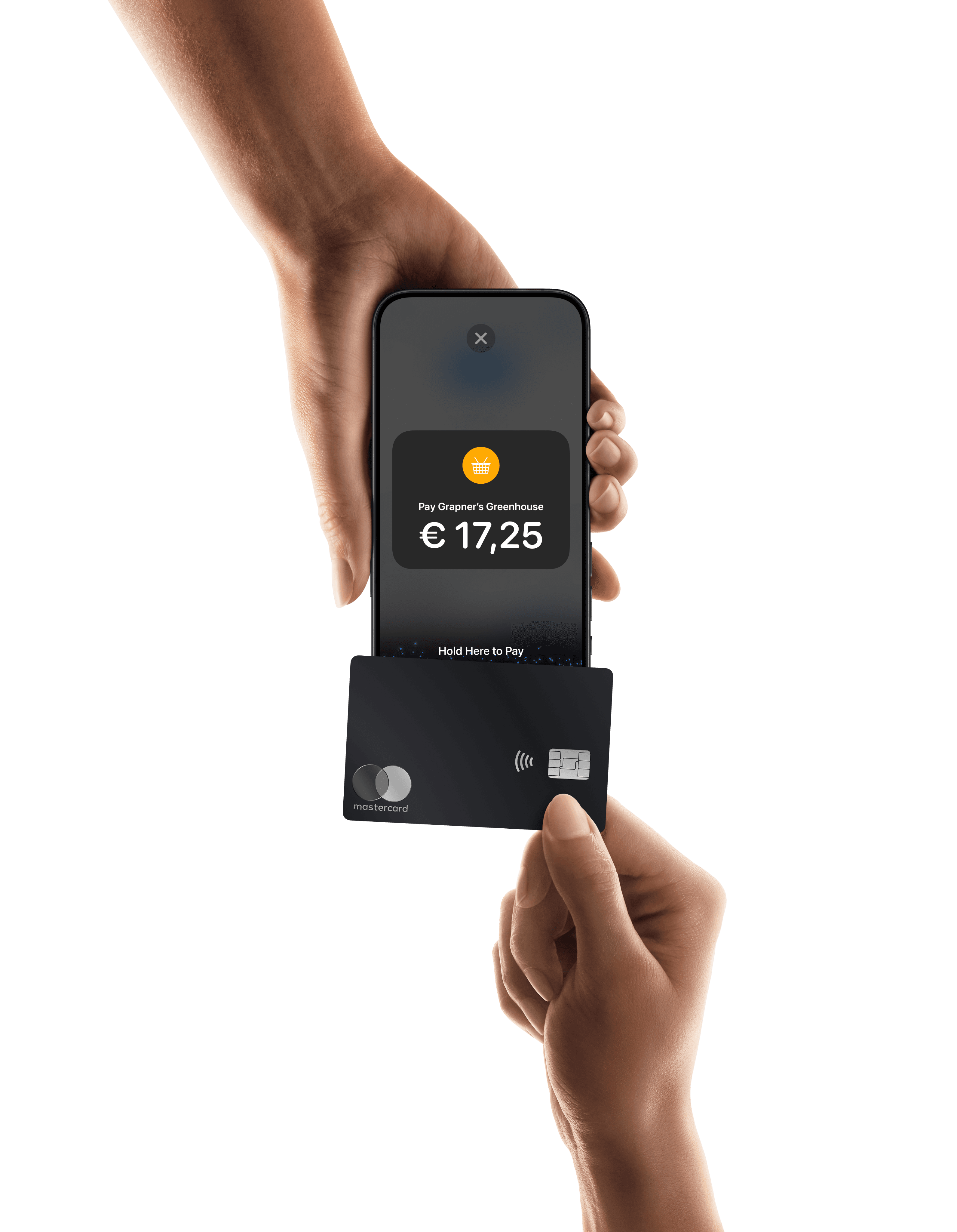
  2. The hardware: This is the physical interface. While the POS terminal remains a staple of the checkout counter, hardware has become increasingly mobile and versatile. From Android-powered tablets to smartphones like Mollie Tap app, the physical tools of the trade are more accessible than ever.

How do POS systems work?

POS systems work by processing transactions through various payment methods, including cash, credit and debit cards, contactless payments, and digital wallets.

Here’s how they work: 

  1. Transaction initiation: The sale begins when a customer decides to purchase a product or service, and the cashier begins the checkout process.

  2. Payment processing: Once the cashier has added every item to the order, the customer pays using their preferred payment method.

  3. Transaction completion: The POS system processes and approves the payment and generates a receipt for the customer.

The shift to electronic Point of Sale (ePOS)

The transition from manual registers to an electronic point of sale, often abbreviated as ePOS, marked the beginning of the data-driven era. Today, the e in ePOS represents much more than just electricity. It stands for intelligence, efficiency, and connectivity.

An electronic POS system does more than just process payments. It acts as a real-time reporting tool. It tracks which items are trending, which staff members are performing best, and when you are likely to run out of stock. For businesses in the European market, these systems are also critical for compliance. With the rollout of new EU digital identity frameworks and instant payment regulations, having a modern EPOS is a strategic necessity for remaining operational and secure.

Simplify POS with Mollie

Our POS solutions are designed to be bold, reliable, and incredibly simple to use.

Types of POS systems

There are a variety of different POS systems available, from streamlined, more basic solutions to bigger devices that offer more features. Each different system usually caters to specific business needs. 

These are some common types of POS systems:

Mobile POS system

A mobile POS system can work in two ways: either using a smartphone or tablet with a separate terminal, or by turning any mobile device into a payment terminal using tap to pay technology like the Mollie Tap app

Standalone POS systems

These are traditional fixed POS systems (or terminals) that are often used in retail stores. They include a computer, monitor, cash drawer, receipt printer, and barcode scanner. They can accept cash, chip and pin, contactless, and digital wallet payments. 

Cloud-based POS systems

Cloud-based POS systems usually integrate both online and in-person payments. All data is stored online, allowing businesses to access their transaction information from anywhere. They’re usually licensed through software providers who charge users via monthly or annual subscriptions and offer features such as data dashboards and inventory management tools.

Self-service kiosks

Primarily used in industries where customers need to self-serve, for example, fast-food and retail, self-service kiosks let customers place orders and pay without needing assistance from staff. You’ve likely seen them lined up in your local McDonald’s or Burger King. 

In retail stores, they can allow customers to purchase products online through the kiosk and have them picked up at a later date. They accept various types of payments such as credit and debit cards, contactless payments, and digital wallets.

Exploring the POS terminal and hardware innovation

The physical POS terminal has undergone a radical transformation. Gone are the days of heavy, grey machines with tangled wires. Today’s hardware is designed to be beautiful, intuitive, and mobile.

Smart terminals

Modern terminals are often built on Android platforms, allowing them to run business apps directly on the device. This means a waiter in a restaurant can check floor plans, take an order, and process a payment all from a single handheld POS terminal. These devices are equipped with 5G connectivity and Wi-Fi redundancy, ensuring that even if your main internet goes down, your ability to take payments remains uninterrupted.

SoftPOS and Tap app

One of the most significant recent developments is the rise of hardware-free payments. SoftPOS technology allows merchants to turn any NFC-enabled smartphone into a high-performance POS system. This is particularly empowering for micro merchants, and accounts for seasonality by expanding payment points instantly during the busy season without hardware investment. It represents the ultimate in flexibility and accessibility.

How to choose the best POS system for your business

With so many options on the market, finding the right POS solutions can feel overwhelming. However, the most successful businesses focus on three key pillars: integration, scalability, and security.

Integration

Your point of sale solutions must talk to the rest of your tech stack. If your sales data doesn’t sync with your accounting software, like Xero or your CRM, like HubSpot, you will spend hours on manual data entry. The goal is to create a seamless flow of information that reduces errors and saves time.

Scalability

As your business grows, your POS solutions should grow with you. Whether you are opening a second location or expanding into a new country, your system should make that transition easy. This includes the ability to handle multiple currencies, local payment methods, and different tax regulations across borders.

Security and compliance

Security is a non-negotiable priority. Modern point of sale solutions must be fully compliant with PCI DSS 4.0 standards. They should use end-to-end encryption and tokenisation to ensure that sensitive customer data never touches their servers in a readable format. Furthermore, with the rise of the eIDAS 2.0 regulation in Europe, your system should be ready to integrate with digital identity wallets for high-value or age-restricted purchases.

Your business needs

Selecting the right POS system depends on your specific business needs.

Best POS systems for retail

Retail businesses can benefit from a POS system that offers powerful inventory management, customer tracking, and sales analytics. This could be a cloud-based terminal or a traditional standalone system. 

However, some retail businesses now favour more mobile solutions that allow them to take payments anywhere. Services like the Tap app can be great for retail stores that want to take payments on the go. 

Best POS systems for restaurants

Restaurants usually require flexibility with their terminals as they will be taking payments from various areas in the restaurant. A cloud-based or mobile POS system can work best for restaurants, ideally still with the traditional Chip & PIN terminal to cater to different customer needs. 

Restaurant operators often opt for POS systems that include features such as table management, split billing, and integration with kitchen ordering systems.

Best POS system for small businesses

Small businesses need affordable, easy-to-use systems that can scale as they grow. If taking payments on the go is important, then a mobile POS system may be the best option. To reduce costs, using Tap to Pay could be considered the best choice for small businesses, as it is easy to set up and doesn’t come with high costs.

Learn more about picking the best pos system for your business.

The future of POS

As we look toward the future, the very concept of the checkout is changing. We are moving toward a world of invisible payments and biometrics.

Biometric authentication

In many leading retail environments, a customer can authorise a payment with a palm scan or facial recognition. This removes the need for physical cards or even smartphones, making the point of sale interaction faster and more secure than ever before.

Open banking and A2A payments

Traditional card schemes are being challenged by Account-to-Account (A2A) payments. By scanning a QR code at the retail point of sale, a customer can pay directly from their bank account. This often results in lower transaction fees for the business and instant settlement of funds, which is a massive boost for cash flow.

Circular economy integrations

Sustainability is no longer an afterthought. Modern POS solutions now include features that support the circular economy, such as integrated trade-in programs or carbon footprint tracking for every purchase. This allows brands to be more authentic and transparent about their environmental impact.

The future of POS systems lies in the ability to adapt to changing customer behaviour and technological advancements. Innovations like Mollie Tap and unified commerce systems are making it easier for businesses to streamline their operations and offer seamless customer experiences.

With this in mind, the biggest POS technology advancements will likely be made for cloud-based and mobile systems.

Simplify POS with Mollie

At Mollie, we believe that payments should be the easiest part of running a business. Our POS solutions are designed to be bold, reliable, and incredibly simple to use.

The Mollie terminal

We offer three different terminals to fit your specific setup. You can choose a pocket-sized mobile reader for selling on the move, a standalone touchscreen terminal for busy store floors, or a fixed countertop terminal for traditional checkouts. Every device arrives ready to use right out of the box. They connect directly to your Mollie dashboard, so you can track all your online and in-store sales in one clear place.

Flexible POS options

If you prefer not to buy extra hardware, you can use the Mollie Tap app. This app lets you accept contactless payments using the devices you already own. You can run it on your smartphone, store tablets, or build it directly into self-service kiosks. It is the easiest way to add extra checkout points when your store gets busy or to let staff take payments anywhere on the floor. 

Discover how our range of POS solutions can help your business.

FAQs about point of sale (POS) system

What is the difference between a POS and an EPOS?

A POS refers to the point of sale in general, while an EPOS specifically refers to an electronic point of sale system. Today, the terms are often used interchangeably because almost all modern systems are electronic and cloud-based.

Do I really need a dedicated POS terminal?

It depends on your business volume. While the Tap app on a smartphone is excellent for mobility and low-volume merchants, a dedicated POS terminal offers better battery life, a more professional appearance for customers, and integrated printing capabilities.

How does point of sale software help with inventory?

Modern point of sale software tracks every sale in real-time across all your channels. When an item is sold in-store, your inventory levels are updated instantly online. This prevents overselling and helps you understand exactly when you need to reorder stock.

Are these POS solutions secure?

Yes. Leading POS solutions are built with multiple layers of security. This includes PCI DSS compliance, end-to-end encryption, and regular software updates to protect against the latest threats. Security is a core part of the design, not an add-on.

Can I use my existing tablet as a retail point of sale?

In many cases, yes. Most modern point of sale software is designed to work on standard tablets like iPads or Android devices. You simply download the app and connect a card reader to start taking payments.

Simplify POS with Mollie

Our POS solutions are designed to be bold, reliable, and incredibly simple to use.

More updates

Stay up to date

Never miss an update. Receive product updates, news and customer stories right into your inbox.

Form fields

Table of contents

Table of contents

MollieGrowthWhat is a POS (point of sale) system? Everything you need to know